ParkPal
Exploring a calmer way to find a place to park.
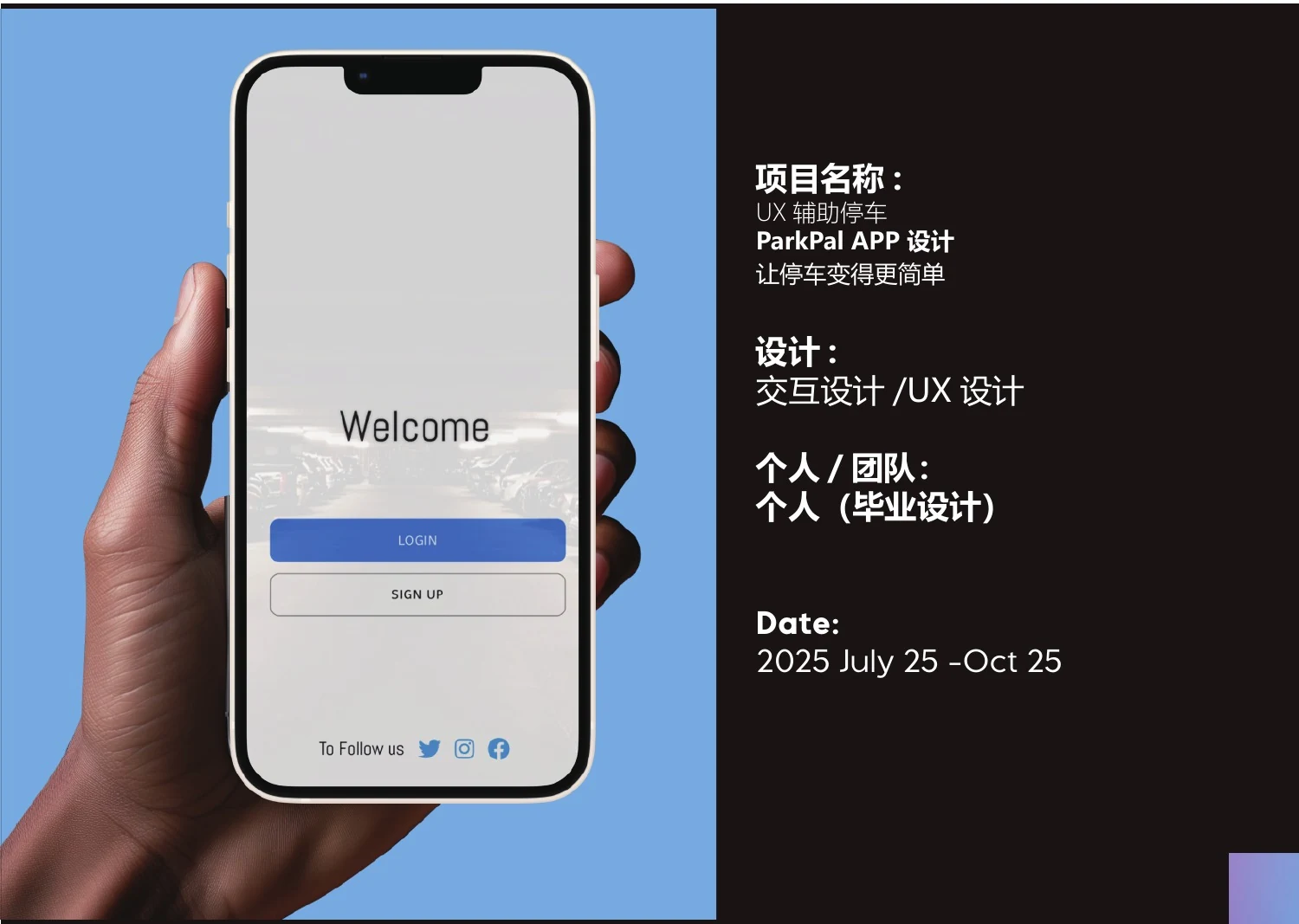
Exploring a calmer way to find a place to park.
ParkPal is an individual graduation design project exploring a parking companion that combines availability views, contextual recommendations and low distraction interaction. The portfolio follows the concept from problem framing and journey mapping through prototype testing and a high fidelity interface.
The uncertainty at the end of a journey
The research framing focuses on time spent searching, unfamiliar parking rules and the attention required to operate a phone while driving. These concerns informed a concept intended to anticipate parking needs and communicate options with less visual effort.
Mapping moments of stress and reassurance
Two personas, a journey map, a storyboard and an empathy map describe the progression from departure to parking. These design artefacts helped connect features to specific moments: uncertainty before arrival, frustration during the search and reassurance after a space is selected.
Defining the core experience
A feature inventory and MoSCoW prioritisation shaped the scope. The main direction combined predictive guidance, availability heatmaps, voice interaction and a minimal interface. Information architecture and user flows then connected onboarding, search, booking and payment.
Testing the flow before refining the surface
Paper sketches and Figma wireframes explored navigation, authentication and the booking sequence. The documented feedback asked for clearer onboarding, more useful availability visualisation and better waiting feedback. Medium fidelity iterations developed search, filtering, saved locations and booking details.
A connected set of parking interactions
The high fidelity screens cover onboarding, map views, filtering, accounts, reservations and parking tickets. A shared palette, iconography and navigation system ties them together. The portfolio also explores an AR view as a later concept variation; the presented screens are design prototypes.
What this project explores.
ParkPal demonstrates a complete UX design process and a broad interactive interface concept. Predictive parking data, live availability and reductions in driving stress remain proposed capabilities and design goals; this portfolio does not establish a deployed service or measured real-world performance.
Original references and design resource credits are retained on portfolio pages 57–58.
Original portfolio pages36 PAGES +
The project as documented in the original portfolio. Select any page to enlarge it.